

Finding out your newborn has a heart murmur can be one of the most stressful moments for any parent but the good news is that most murmurs are completely harmless and resolve on their own. A heart murmur is simply an extra sound the doctor hears between your baby’s heartbeats, and it does not always mean something is wrong. This guide gives you a clear, honest, and simple breakdown of everything you need to know about newborn heart murmur from causes and symptoms to diagnosis and treatment.
What is a Newborn Heart Murmur?
A newborn heart murmur is an unusual sound often described as whooshing, swishing, or blowing that a doctor detects through a stethoscope while listening to a baby’s heart. This sound comes from the way blood flows through or around the heart. It is important to understand from the very beginning that a heart murmur is not a diagnosis or a disease it is simply a sound. That sound may indicate something harmless, or in fewer cases, it may point to a heart condition that needs further attention.
Heart murmurs in newborns are far more common than most parents realize. Research shows that close to 80% of babies may have a murmur detected within their first few days of life. The overwhelming majority of these disappear naturally as the baby’s heart matures.
Doctors classify newborn heart murmurs into two main types:
- Innocent Heart Murmurs Also called functional murmurs, these are caused by normal blood flowing through a perfectly healthy heart. They carry no medical risk and typically fade away as the baby grows older. No treatment is required.
- Abnormal Heart Murmurs These are linked to structural problems inside the heart — such as a hole between heart chambers or a narrowed valve. They require proper investigation and may need treatment depending on the severity.
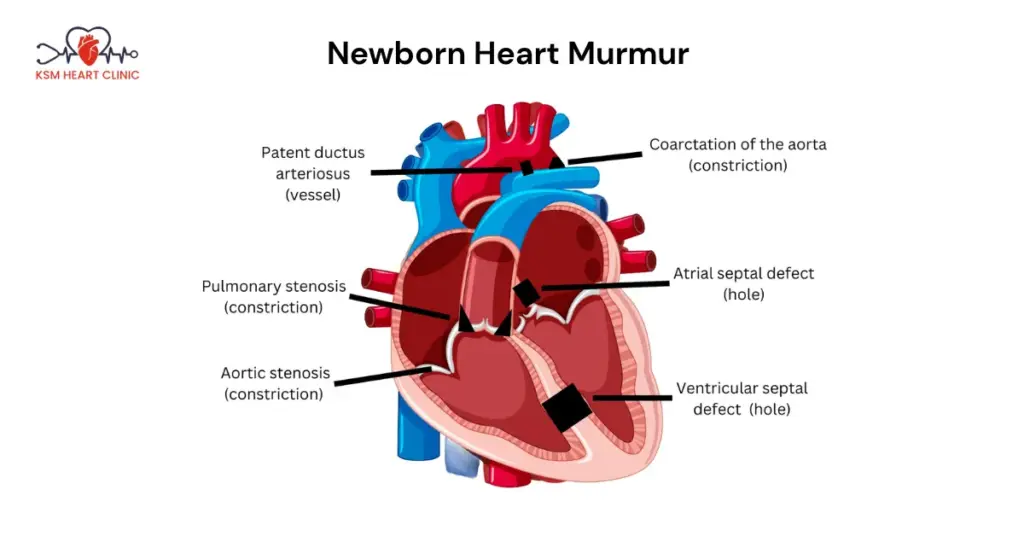
Why do Newborns Get Heart Murmurs?
There are several reasons why a newborn heart murmur may develop. Understanding each cause helps parents make sense of the diagnosis and have more productive conversations with their doctor.
- Patent Ductus Arteriosus (PDA) During pregnancy, babies rely on a small blood vessel called the ductus arteriosus to bypass the lungs, since the lungs are not yet in use. After birth, this vessel should close naturally within the first two to three days. When it remains open, blood flows in an abnormal pattern producing a murmur. PDA is especially common in premature babies whose bodies have not yet completed this transition.
- Ventricular Septal Defect (VSD) A VSD is a hole in the muscular wall that separates the two lower chambers of the heart. Blood leaks through this opening, creating turbulent flow and the characteristic murmur sound. Small VSDs often seal themselves without any intervention as the child grows.
- Atrial Septal Defect (ASD) Similar to a VSD but occurring in the upper chambers of the heart, an ASD may not produce noticeable symptoms in early infancy. However, it can be identified through a murmur during a routine examination and confirmed with imaging.
- Pulmonary Stenosis This condition occurs when the pulmonary valve responsible for controlling blood flow from the heart to the lungs is narrower than it should be. The restricted opening forces blood through at a higher speed, producing a murmur. Mild cases may not require treatment, while more significant narrowing may need intervention.
- Normal Circulatory Transition After Birth In the first hours and days after birth, a newborn’s entire circulatory system undergoes a dramatic transformation. The baby shifts from relying on the mother’s blood supply to functioning completely on its own. During this adjustment period, temporary murmurs are very common and are considered a completely normal part of newborn development.
Signs and Symptoms Parents should Watch For
Innocent murmurs produce no symptoms at all your baby will feed, sleep, and behave completely normally. However, if the murmur is related to an underlying heart condition, you may begin to notice certain warning signs. These include:
- A bluish or purplish tint on the lips, fingernails, or skin a condition called cyanosis which suggests the baby is not receiving enough oxygen
- Fast or difficult breathing even while the baby is resting quietly
- Feeding difficulties the baby becomes exhausted quickly during feeds or refuses to feed at all
- Poor weight gain despite feeding regularly and adequately
- Sweating excessively during feeding or while at rest
- Persistent tiredness or lethargy the baby is unusually difficult to rouse or seems weak
- Visible swelling in the legs, abdomen, or around the eyes
If you observe any of these signs, do not wait contact your pediatrician the same day. Early identification of a heart condition significantly improves the outcome for your baby.
How is a Newborn Heart Murmur Diagnosed?
Diagnosing a newborn heart murmur accurately requires more than just listening to the heart. Doctors use a combination of tools and tests to build a complete and reliable picture.
- Physical Examination Every assessment begins with the doctor carefully listening to the heart using a stethoscope. They evaluate the murmur based on how loud it is, where it is heard most clearly, when it occurs during the heartbeat cycle, and what it sounds like all of which help distinguish an innocent murmur from one that needs investigation.
- Chest X-Ray A chest X-ray reveals the size and shape of the heart and surrounding structures. An enlarged heart or unusual lung appearance can point toward a structural problem.
- Electrocardiogram (ECG) An ECG captures the electrical signals that control the heartbeat. It helps doctors identify abnormal rhythms, signs of heart muscle strain, or irregular electrical patterns that may accompany certain heart defects.
- Echocardiogram This is the single most important test for evaluating a newborn heart murmur. An echocardiogram uses safe ultrasound waves to produce real-time moving images of the heart’s structure and function. It shows exactly how the chambers, valves, and blood vessels are working and pinpoints any structural abnormalities. The test is completely painless and safe for newborns.
- Pulse Oximetry A small, clip-like sensor placed on the baby’s finger or toe measures the oxygen saturation in the blood. A reading below the normal range can be an early indicator of a heart or lung issue and prompts further evaluation.
Treatment Options for Newborn Heart Murmur
The right treatment approach depends entirely on what type of murmur your baby has and what, if anything, is causing it.
- Innocent Murmurs Monitoring Only When the murmur is confirmed to be innocent, no treatment is needed at all. The doctor will keep an eye on it during regular well-baby visits and confirm that it fades away as expected.
- Medication Certain conditions respond well to medication. For example, PDA can sometimes be treated with medicines that encourage the open vessel to close on its own. Other medications may be prescribed to manage related symptoms like excess fluid around the heart or an irregular heartbeat.
- Cardiac Catheterization For some structural defects, a minimally invasive procedure called cardiac catheterization is used. A thin, flexible tube is carefully guided through a blood vessel and directed toward the heart, where small instruments are used to repair the defect often without any surgical incision.
- Open-Heart Surgery In more complex or severe cases such as significant valve defects or large holes between heart chambers surgery may be necessary. This may feel overwhelming to hear, but cardiac surgery in newborns is performed with exceptional skill at specialized centers and carries a very high success rate.
- Long Term Follow Up Whether treatment is needed or not, regular monitoring with a pediatric cardiologist remains essential. Follow-up echocardiograms and check-ups ensure the heart continues to develop well and that no new concerns arise.
Prevention and Risk Factors
While not every case of congenital heart murmur can be prevented, knowing the risk factors helps parents take proactive steps during pregnancy.
- A family history of congenital heart conditions increases the likelihood
- Uncontrolled diabetes during pregnancy can affect the baby’s heart development
- Infections during pregnancy particularly rubella are known to increase risk
- Certain prescription medications taken during the first trimester may affect heart formation
- Premature birth significantly raises the chance of PDA and related murmurs
Good prenatal care, honest communication with your doctor, and early screening can go a long way in identifying any concerns before or shortly after birth.
Living with a Child who has a Heart Murmur
- For most families, an innocent murmur changes nothing about daily life. Your baby can feed, play, sleep, and grow exactly like any other child because their heart is perfectly healthy.
- For families dealing with a structural heart condition, the journey may involve more appointments and decisions, but the outlook is genuinely positive for most children. With the right medical support, many children with treated heart defects go on to participate in sports, thrive academically, and live without any significant long-term limitations. Connecting with a pediatric cardiology team and other families in similar situations can make an enormous difference in how supported and confident you feel.
Conclusion
A newborn heart murmur can feel like frightening news, but understanding it clearly makes all the difference. Most murmurs are innocent, many resolve without any intervention, and even those linked to heart conditions can be treated successfully with today’s advanced pediatric cardiac care. Keep attending your baby’s check-ups, stay in close contact with your medical team, and remember with the right support, your baby’s heart health is in very capable hands.