Heart health matters more now than ever before. As one of the most experienced cardiologists practicing today, Dr. Karthick Sabapathi has seen firsthand how much difference early awareness can make. Understanding the causes of heart disease is the very first step toward protecting yourself and your loved ones. Most people wait until something feels wrong before they pay attention to their heart. But by then, the problem may have been quietly building for years. The good news is when you know what to watch for, you can act early.
What is Heart Disease?
- Heart disease is not just one condition. It is a broad term that covers several problems affecting how your heart works. This includes blocked arteries, irregular heartbeats, weak heart muscles, and damage to the heart valves.
- The most common type is coronary artery disease. This happens when the arteries that carry blood to your heart muscle become narrow or blocked due to a buildup of fatty deposits called plaque. Over time, this reduces blood flow and can lead to a heart attack.
- Other forms include heart failure, where the heart cannot pump blood efficiently, and arrhythmia, where the heart beats too fast, too slow, or in an uneven pattern. Each of these has its own set of warning signs and symptoms of heart disease, but many share common root causes.
Why Heart Disease is a Growing Health Concern
- Heart disease is now one of the leading causes of death across India and the world. What makes it especially concerning is that it is no longer just a problem for older people. Dr. Karthick Sabapathi regularly sees patients in their 30s and 40s who are already showing early signs of heart trouble.
- Changing lifestyles play a big role in this shift. More people are eating processed food, sitting for long hours, not sleeping enough, and dealing with constant stress. These habits are quietly raising the risk of heart disease in younger generations.
- The silver lining is that most of the causes of heart disease are things you can actually do something about. With the right knowledge and the right guidance, preventing heart disease is genuinely possible.
Importance of Knowing the Risk Factors
- Knowing your risk factors is like reading the early warning signals your body sends out. Some of these factors are related to your lifestyle what you eat, how you move, and how you manage stress. Others are medical conditions like high blood pressure or diabetes. And some are inherited, meaning they come from your family history.
- When you understand which of these apply to you, you and your doctor can take specific steps to reduce your risk. That is exactly the approach Dr. Karthick Sabapathi follows with every patient personalized, clear, and focused on prevention first.
Lifestyle Related Causes of Heart Disease
Your daily habits have a direct and powerful effect on your heart. In fact, lifestyle choices are among the most significant causes of heart disease that can be changed with the right support.
Unhealthy Diet and Poor Nutrition
- What you eat every day either protects your heart or puts it under pressure. A diet that is heavy in fried food, refined sugar, salty snacks, and processed meats gradually raises bad cholesterol, promotes inflammation, and contributes to plaque buildup in the arteries.
- On the other hand, a diet rich in vegetables, fruits, whole grains, legumes, and healthy fats supports clean, flexible blood vessels. The problem in today’s fast moving world is that convenience often wins over nutrition.
- Skipping meals, relying on packaged food, and eating late at night are patterns many people don’t think of as harmful but over time, they steadily increase the risk of heart disease. Small, consistent improvements in your diet can make a real difference to your heart health over the years.
Lack of Physical Activity
- The human heart is a muscle. Like any muscle, it gets stronger with regular use and weaker without it. When you are not physically active, your heart becomes less efficient at pumping blood, and your blood vessels lose their flexibility.
- A sedentary lifestyle also leads to weight gain, raises blood pressure, and makes it harder for your body to manage blood sugar all of which are well known causes of heart disease.
- You do not need to train like an athlete. Even 30 minutes of brisk walking five days a week can significantly improve your heart function, lower your blood pressure, and help you manage your weight. The key is consistency, not intensity.
Smoking and Tobacco Use
- Smoking is one of the most damaging habits for your heart. The chemicals in tobacco directly injure the inner walls of your blood vessels. This damage triggers the buildup of fatty plaque and causes the arteries to stiffen and narrow over time.
- Smokers are significantly more likely to experience a heart attack compared to non smokers. The risk goes up even further for those who also have high blood pressure or diabetes.
- What many people do not realize is that second hand smoke carries almost the same risks. Extended exposure to someone else’s smoke can raise your heart disease risk considerably. Quitting smoking at any age starts to reverse heart damage within weeks, and the benefits continue to grow over time.
Excessive Alcohol Consumption
- Having an occasional drink may not be a major concern, but regular heavy drinking is a different story. Excessive alcohol raises blood pressure, increases triglyceride levels in the blood, and can cause the heart muscle to weaken a condition called alcoholic cardiomyopathy.
- Heavy drinking also contributes to weight gain and liver stress, both of which have downstream effects on the heart. If you drink regularly, being honest with your doctor about how much you consume is important, as alcohol is an underappreciated cause of heart disease.
Chronic Stress and Poor Sleep Habits
- Stress, when it becomes chronic, has a serious impact on your heart. When you are constantly under pressure, your body releases stress hormones like adrenaline and cortisol. These hormones raise your blood pressure and heart rate, and over time, they promote inflammation in the arteries.
- People under long term stress also tend to cope in ways that are harmful eating more, sleeping less, drinking more, and exercising less. All of these habits feed into the cycle of heart disease risk.
- Sleep is just as important. Poor sleep quality or sleeping less than six hours a night is associated with higher blood pressure, weight gain, and a higher chance of developing a heart condition. Prioritizing rest is not a luxury it is a part of heart care.
Medical Conditions that Cause Heart Disease
Certain health conditions create the conditions inside your body that allow heart disease to develop. These medical causes of heart disease often work silently, which is why regular health checks are so important.
High Blood Pressure (Hypertension)
- High blood pressure is sometimes called the silent killer and for good reason. Most people with hypertension feel completely fine until something serious happens.
- When your blood pressure stays elevated over months or years, it puts constant mechanical strain on the walls of your arteries. This causes tiny injuries in the lining of the vessels, which then become the starting point for plaque formation. The arteries also become stiffer and less responsive.
- Over time, the heart has to work harder to push blood through narrowed vessels. This extra workload causes the heart muscle to thicken, which actually reduces how efficiently it pumps. Left untreated, hypertension is one of the most direct and damaging causes of heart disease.
High Cholesterol Levels
- Cholesterol is a fatty substance found in your blood. Not all cholesterol is harmful your body needs some of it to function. But when LDL (low density lipoprotein), often called bad cholesterol, builds up in your arteries, it forms plaques.
- These plaques narrow the arteries and reduce blood flow to the heart. If a plaque ruptures, it can cause a blood clot that completely blocks the artery which is what happens during a heart attack.
- Most people with high cholesterol have no symptoms at all. A simple blood test is the only way to know your levels. This is why regular screening is a central part of the heart care approach at Dr. Karthick Sabapathi’s practice.
Diabetes and Blood Sugar Problems
- Diabetes has a deep and complicated relationship with heart disease. High blood sugar levels damage blood vessels over time, making them stiff and inflamed. This accelerates the buildup of plaque in the coronary arteries.
- People with type 2 diabetes are two to four times more likely to develop heart disease than those without diabetes. What makes this more concerning is that many people have prediabetes or undiagnosed diabetes without knowing it.
- Even before blood sugar reaches diabetic levels, insulin resistance the underlying problem in type 2 diabetes already starts affecting the heart and blood vessels. Managing blood sugar through diet, exercise, and medication where needed is essential to reducing this risk.
Obesity and Overweight Issues
- Carrying extra weight, especially around the waist, places significant strain on the heart. It raises blood pressure, increases bad cholesterol, promotes inflammation, and makes the body resistant to insulin all of which are established causes of heart disease.
- Obesity also causes the heart to work harder to supply oxygen and nutrients to a larger body. Over years, this extra workload weakens the heart muscle.
- It is worth knowing that even modest weight loss losing 5 to 10 percent of body weight can produce meaningful improvements in blood pressure, cholesterol, and blood sugar levels. Dr. Karthick Sabapathi works with patients on gradual, sustainable weight management as part of a broader heart health plan.
Metabolic Syndrome
- Metabolic syndrome is the name given when several of the above conditions appear together. If a person has high blood pressure, high blood sugar, excess abdominal fat, and abnormal cholesterol levels all at once, they have metabolic syndrome.
- Having this cluster of conditions multiplies the risk of heart disease and stroke significantly. Metabolic syndrome is now very common and it is rising rapidly in India largely because of changing diets and activity levels.
- The encouraging part is that metabolic syndrome responds well to lifestyle changes. Diet, exercise, and stress management can reverse many of these conditions before they cause serious damage.
Genetic and Family History Factors
Not all risk factors are in your control. Some causes of heart disease are written into your biology but knowing about them means you can be extra careful in other areas.
Inherited Heart Conditions
- Some heart conditions are passed down through families. Hypertrophic cardiomyopathy, a condition where the heart muscle becomes unusually thick, is one example. Certain types of arrhythmia and congenital heart defects are also genetic in origin.
- If you have an inherited condition, it does not mean heart disease is inevitable. But it does mean your doctor needs to know about it so the right monitoring and management plan can be put in place early.
Family History of Heart Disease
- Having a close family member a parent, sibling, or grandparent who had a heart attack or was diagnosed with heart disease before the age of 60 increases your own risk. This is especially relevant if the family member affected was a male under 55 or a female under 65.
- Family history reflects a shared set of genes, but also shared environmental influences similar diets, similar lifestyles, and sometimes similar stress patterns. Dr. Karthick Sabapathi always asks about family history during consultations because it directly shapes how closely a patient needs to be monitored.
Age and Gender Related Risks
- Risk naturally increases with age for both men and women. As the body ages, blood vessels gradually lose some elasticity, and years of exposure to risk factors start to accumulate.
- Men generally develop heart disease at a younger age than women. However, after menopause, a woman’s risk rises sharply and eventually approaches that of men. This is because estrogen has a protective effect on blood vessels, and that protection diminishes after menopause.
- These patterns mean that heart health conversations should begin early not just when someone reaches their 50s.
Environmental and External Causes
Beyond personal health choices and genetics, the environment you live and work in also plays a role.
Air Pollution and Environmental Toxins
- Long term exposure to air pollution particularly fine particulate matter from vehicle emissions, industrial activity, and indoor burning is now recognized as a significant contributor to heart disease. These tiny particles enter the bloodstream through the lungs and cause inflammation in blood vessels.
- Research over the past decade has shown that people who live in areas with consistently high air pollution have higher rates of heart disease and stroke. In cities across India, air quality remains a growing concern, making this an increasingly relevant risk factor.
Sedentary Work Lifestyle
- Modern work life often involves sitting at a desk for eight to ten hours a day. Extended sitting even in people who exercise regularly has been linked to higher blood pressure, poor blood sugar regulation, and increased cardiovascular risk.
- Taking short movement breaks every hour, standing while working when possible, and walking during lunch are practical ways to counteract the effects of a desk bound lifestyle.
Drug Abuse and Substance Use
- Certain drugs, including cocaine and amphetamines, cause sudden and severe spikes in heart rate and blood pressure. These spikes can trigger heart attacks even in young people with otherwise healthy hearts.
- Long term use of these substances causes lasting damage to the heart muscle and blood vessels. Anabolic steroids, sometimes used for fitness purposes, also carry serious cardiovascular risks.
Early Warning Signs Linked to Heart Disease
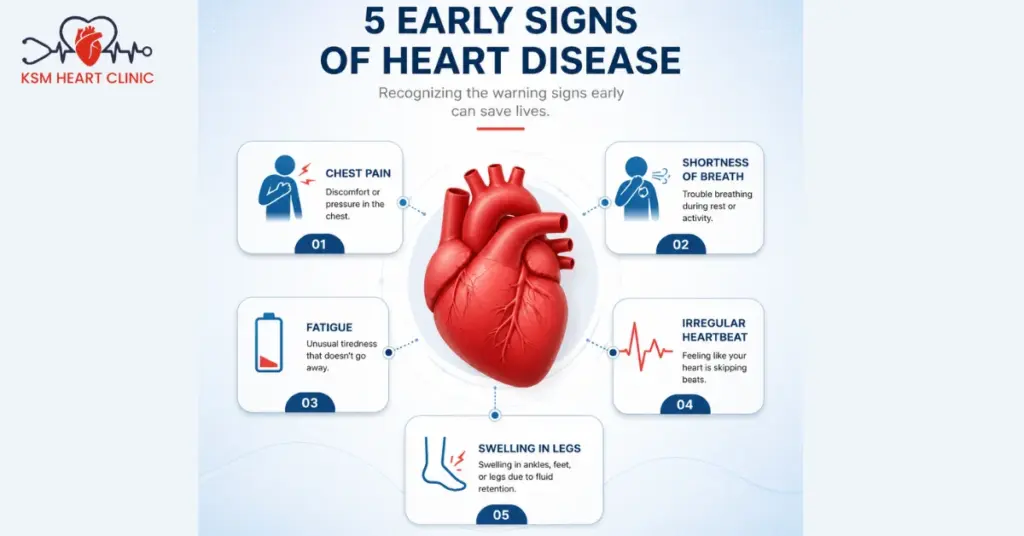
Recognizing the early sign of heart disease and the warning signs and symptoms of heart disease can make a life saving difference. These signs are your body’s way of asking for attention.
Chest Pain and Discomfort
- Chest pain is the most well known warning sign. It can feel like pressure, tightness, a heavy weight on the chest, or a burning sensation. This discomfort may spread to the arm, shoulder, jaw, or back.
- Not all chest pain means a heart attack is happening, but any unexplained chest discomfort that lasts more than a few minutes or keeps coming back needs to be evaluated promptly. This is one of the most important warning signs and symptoms of heart disease that should never be ignored.
Shortness of Breath
- Feeling breathless during activities that used to feel easy walking up stairs, carrying groceries, or even light housework can be an early sign of heart disease. When the heart is not pumping effectively, fluid can accumulate in the lungs, making breathing difficult.
- Some people notice breathlessness when lying flat, which is another specific symptom linked to heart failure. If you find yourself needing extra pillows to sleep comfortably, that is worth discussing with a cardiologist.
Fatigue and Weakness
- Unexplained tiredness that does not go away with rest is one of the more subtle symptoms of heart disease. When the heart has to work harder than normal to pump blood, the body especially muscles receives less oxygen and energy, leading to persistent fatigue.
- This type of fatigue is often written off as stress or aging. But if it is new, progressive, or accompanied by other symptoms, it should be taken seriously.
Irregular Heartbeat or Palpitations
- Feeling your heart flutter, race, pound, or skip a beat is called a palpitation. Occasional palpitations are often harmless, but frequent or prolonged episodes can be an early sign of heart disease or an arrhythmia.
- Palpitations that come with dizziness, chest discomfort, or breathlessness are particularly important to evaluate. Dr. Karthick Sabapathi uses ECG and other diagnostic tools to identify the underlying cause accurately.
How to Reduce the Risk of Heart Disease
Prevention is always better than treatment. Most of the causes of heart disease are within your power to influence and that is an encouraging truth.
Healthy Eating Habits
- A heart healthy diet does not have to be restrictive or complicated. Focus on whole, minimally processed foods. Include plenty of vegetables, fruits, legumes, and whole grains. Choose healthy fats like those found in nuts, seeds, and fish. Reduce your intake of refined sugar, excess salt, fried foods, and red meat.
- Traditional South Indian cooking, when not overloaded with oil and refined carbohydrates, actually contains many heart supportive ingredients. Small modifications can preserve cultural food traditions while meaningfully improving heart health.
Regular Exercise and Fitness
- Aim for at least 150 minutes of moderate intensity exercise per week. This could be brisk walking, cycling, swimming, or yoga. Strength training two or three times a week also supports heart health by improving metabolism and blood sugar management.
- If you have existing heart conditions or have been inactive for a long time, speak to Dr. Karthick Sabapathi before starting an exercise routine. A customized plan based on your current health status is always the safest starting point.
Managing Stress Effectively
- Stress management is a medical issue, not just a lifestyle preference. Chronic stress genuinely harms the heart, and addressing it needs to be part of any heart health plan.
- Practices like meditation, deep breathing, regular time outdoors, adequate sleep, and maintaining meaningful relationships all reduce the physiological impact of stress. If your stress levels feel unmanageable, professional support is available and absolutely appropriate to seek.
Regular Health Checkups and Screening
- Many of the most dangerous causes of heart disease high blood pressure, high cholesterol, diabetes, and metabolic syndrome have no early symptoms. The only way to find them is through routine testing.
- Dr. Karthick Sabapathi recommends that adults from the age of 30 onwards get a basic cardiac health screening at least once a year. For those with a family history or existing risk factors, more frequent monitoring is advisable.
- Early detection changes outcomes significantly. A condition caught at the right time is far easier to manage and reverse than one found after damage has already occurred.
Conclusion
Understanding the causes of heart disease is not about creating worry it is about giving you the information you need to take control. Most heart conditions are preventable, or at the very least, manageable, when the right steps are taken early. The connection between daily habits, medical conditions, genetics, and environment paints a full picture of how heart disease develops. And within that picture, there is a great deal you can influence. Whether you are looking to reduce your personal risk, support a family member, or simply understand your body better, the information above is a solid starting point. Dr. Karthick Sabapathi brings both clinical depth and genuine care to every patient interaction. If you have concerns about your heart health or if you simply want to get ahead of potential risks reaching out for a consultation is the most valuable step you can take.