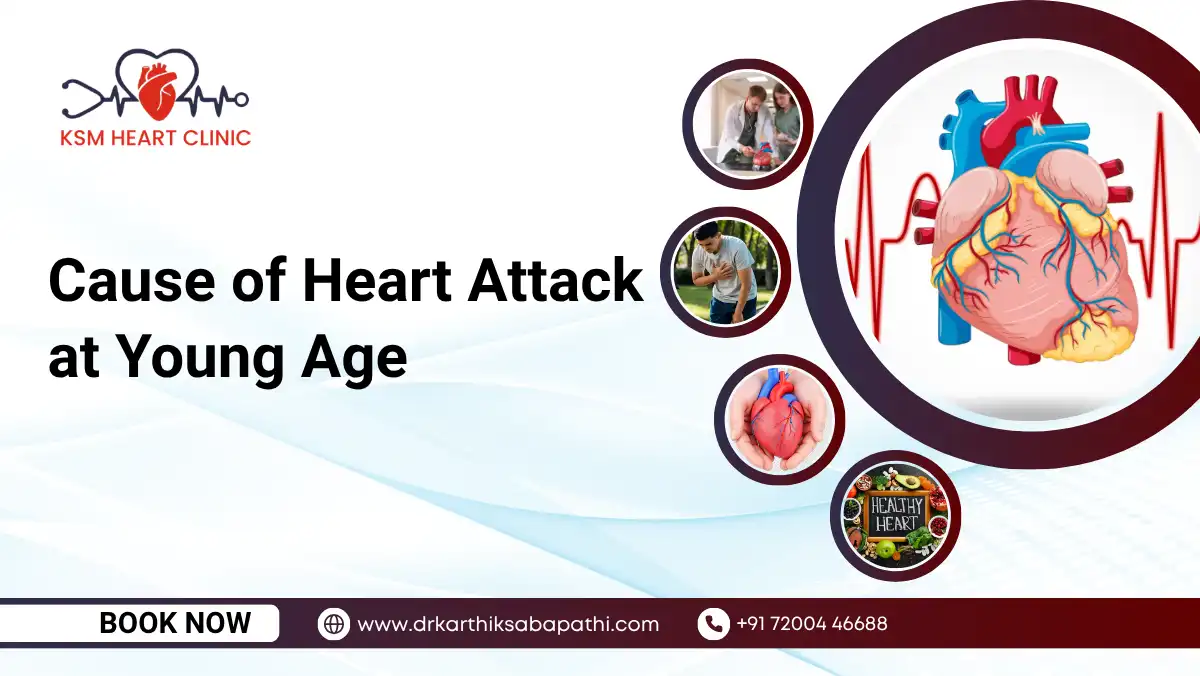
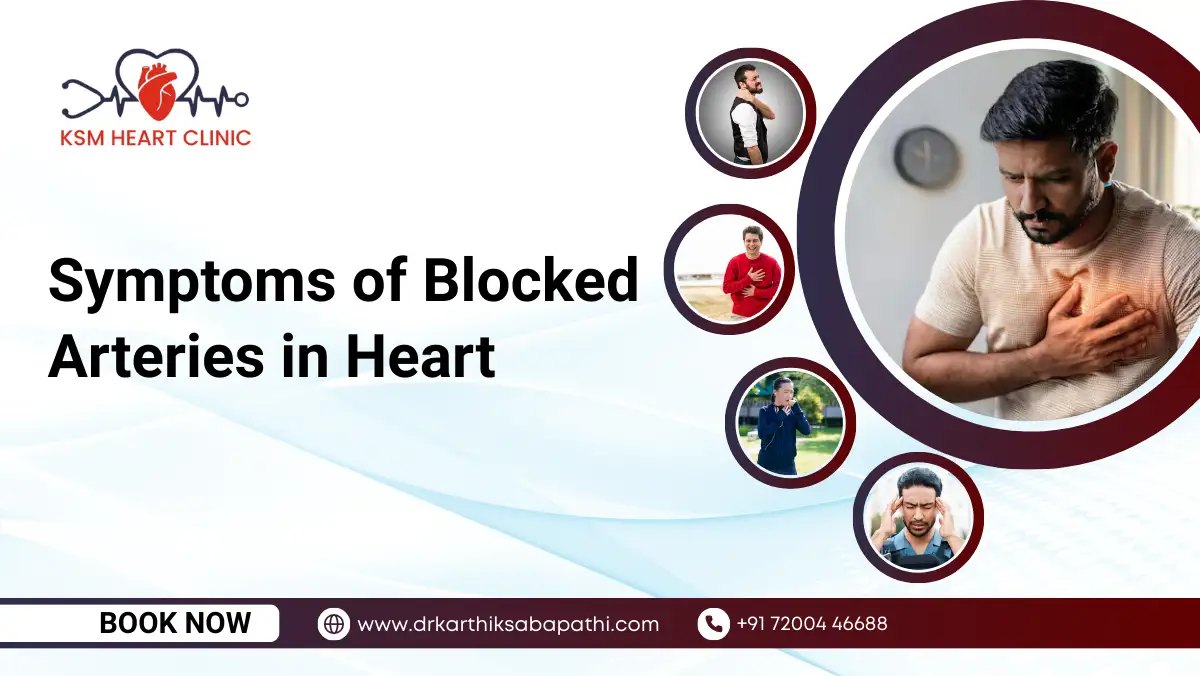
Blocked arteries in the heart are a major cause of heart disease, but many people don’t realize they have a problem until it becomes serious. Over time, fatty deposits build up inside the heart’s arteries and slowly reduce blood flow to the heart muscle. Recognizing the symptoms of blocked arteries in heart at an early stage can help prevent serious problems like heart attacks or heart failure. Because the warning signs are often mild or confusing, knowing how your body gives early signals is key to getting medical help on time.
What are Blocked Arteries in the Heart?
Blocked arteries occur when cholesterol, fat, calcium, and inflammatory substances build up along artery walls, forming plaque. Over time, this build up hardens and restricts blood flow to the heart. In some cases, arteries may be partially blocked without obvious pain, while sudden plaque rupture can cause complete blockage. These changes explain why the symptoms of blocked arteries in the heart vary widely between individuals.
Why Blocked Arteries are a Silent Threat
Blocked arteries in the heart often develop slowly and without obvious warning signs. As plaque builds up inside the coronary arteries, blood flow reduces gradually, but the heart compensates by working harder. This adaptation masks early damage, allowing the condition to progress unnoticed for years. During this stage, the signs of blocked arteries are subtle and commonly mistaken for everyday stress, fatigue, or aging, which delays diagnosis and increases the risk of serious heart complications.
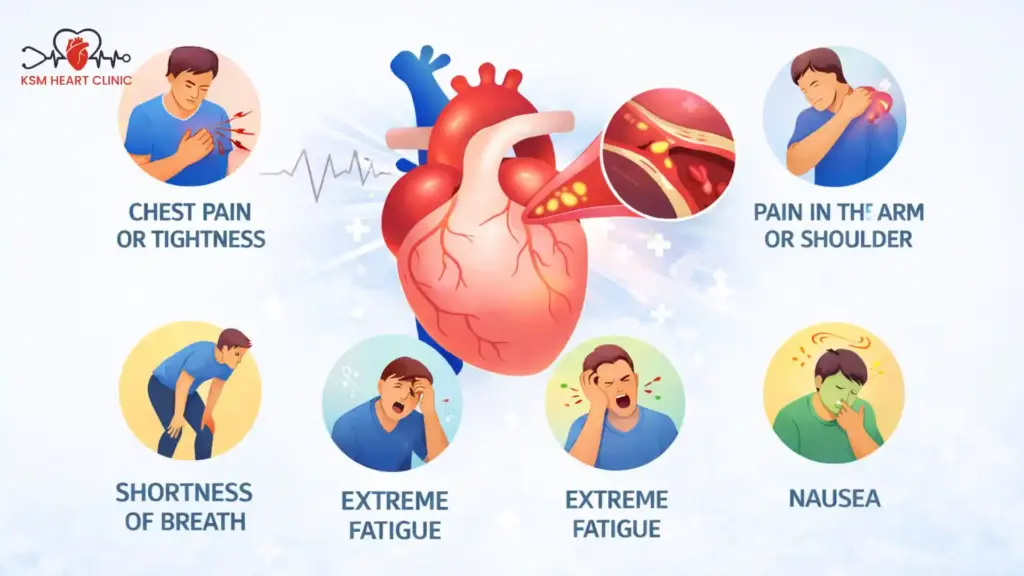
Mild Chest Discomfort: Early chest discomfort may feel like tightness, pressure, or heaviness rather than sharp pain. It usually occurs during physical activity or emotional stress and eases with rest, causing many people to dismiss it as acidity or muscle strain.
Shortness of Breath on Exertion: Narrowed arteries limit oxygen supply to the heart, making routine activities like walking or climbing stairs feel unusually tiring. This gradual breathlessness is often blamed on poor fitness or weight gain.
Unusual Fatigue: Persistent tiredness without a clear cause can signal reduced blood flow to the heart. As the heart works harder to compensate, the body experiences constant low energy, especially in individuals with diabetes or high blood pressure.
Early Symptoms of Blocked Arteries in Heart
As the blockage in the coronary arteries increases, the heart struggles to receive enough oxygen-rich blood to function normally. At this stage, the body can no longer fully compensate for reduced blood flow, and symptoms become more frequent and intense. These symptoms of blocked arteries in heart are clear warning signals that the heart is under stress and should never be ignored, as delayed treatment can lead to heart attack or long-term heart damage.
Chest Pain (Angina)
Chest pain, medically known as angina, is one of the most common early symptoms. It often feels like pressure, tightness, squeezing, or a heavy sensation in the centre or left side of the chest. Angina typically occurs during physical activity, emotional stress, or after heavy meals, when the heart needs more oxygen. The pain may subside with rest or medication, but recurring episodes indicate ongoing restriction of blood flow to the heart muscle.
Pain Spreading to Arm, Jaw, or Back
When blood supply to the heart is inadequate, pain signals can travel along shared nerve pathways, causing discomfort beyond the chest. This referred pain may extend to the left arm, shoulders, neck, jaw, or upper back. Many people mistake this symptom for muscle strain or dental issues, but it is a key indicator of worsening arterial blockage and requires prompt medical attention.
Dizziness or Fainting
Reduced blood flow affects not only the heart but also the brain. As a result, individuals may experience light-headedness, sudden sweating, nausea, or even brief episodes of fainting. These symptoms suggest that the heart is unable to pump sufficient blood effectively and represent a serious sign of block arteries that demands immediate medical evaluation.
Symptoms of Blocked Arteries in Men vs Women
Blocked arteries in the heart do not always present the same way in everyone. Men and women often experience different warning signs, which can lead to confusion or delayed diagnosis if these differences are not recognized. Understanding how symptoms vary by gender helps in identifying the symptoms of blocked arteries in heart at the right time.
Symptoms in Men
Men are more likely to experience what are considered “classic” heart-related symptoms. The most common sign is chest pain or pressure, often described as tightness, squeezing, or heaviness in the center or left side of the chest. This discomfort may spread to the left arm, shoulder, neck, or jaw and is usually triggered by physical activity or stress. Men may also experience shortness of breath, sweating, or dizziness alongside chest pain. Because these symptoms are more widely recognized, men often seek medical help sooner.
Symptoms in Women
Women frequently experience less obvious and more subtle symptoms, which can be easily overlooked. Instead of severe chest pain, women may feel unexplained shortness of breath, nausea, vomiting, or discomfort in the back, neck, or jaw. Extreme fatigue, weakness, and sleep disturbances are also common early signs. These symptoms may appear gradually and are often mistaken for stress, acidity, or hormonal changes, increasing the risk of misdiagnosis and delayed treatment.
When do Symptoms Appear Suddenly?
Symptoms can appear suddenly when an unstable plaque inside the artery ruptures and forms a blood clot, blocking blood flow to the heart. This can happen without warning, even in people with mild or unnoticed artery narrowing. Triggers such as intense stress, smoking, uncontrolled diabetes, or sudden heavy physical exertion can increase the risk. In these situations, the signs of blocked arteries worsen rapidly and may lead to a heart attack.
How Blocked Arteries are Diagnosed
Doctors assess the symptoms of blocked arteries in heart through physical examination and medical history. Diagnostic tests such as ECG and stress testing help evaluate heart function under strain. Echocardiography and CT coronary angiography provide detailed images of the heart and arteries. In advanced cases, coronary angiography is used to accurately identify the location and severity of arterial blockage.
Can Symptoms Be Reversed or Controlled?
Yes, when detected early, many early symptoms of blocked arteries can be controlled or improved. Lifestyle changes such as healthy diet, exercise, quitting smoking, and stress management play a major role. Medications help reduce cholesterol and improve blood flow, while advanced cases may require angioplasty or bypass surgery to restore circulation.
Conclusion
Blocked heart arteries usually develop slowly and without clear warning signs, which is why many people do not realize there is a problem until serious damage has already occurred. Paying close attention to the symptoms of blocked arteries in heart, even when they seem mild, helps doctors diagnose the condition early and begin the right treatment. Symptoms such as ongoing fatigue, breathlessness, or chest discomfort should never be ignored. Seeking medical care at the right time not only eases symptoms but also greatly reduces the risk of heart attacks, heart failure, and other life-threatening heart conditions, helping protect long-term heart health.