CGMS(Continuous Glucose Monitoring System)

Book Continuous Glucose Monitoring System in Chennai to track glucose levels continuously, manage diabetes effectively, and receive professional care.
CGMS(Continuous Glucose Monitoring System)

99%

Safety Rate

Years of Experience

0 +

Safety Rate

0 %

Emergency Care

0 /7

CGMS(Continuous Glucose Monitoring System)

The CGMS (Continuous Glucose Monitoring System) is an advanced technology that helps individuals track their blood sugar levels throughout the day without frequent finger pricks. By using a small sensor placed under the skin, it provides real-time blood sugar tracking, allowing for accurate and continuous monitoring. This system empowers people with diabetes to manage their condition more effectively and make informed lifestyle or medication adjustments.

Dr. Karthick Sabapathi, a trusted name in diabetes and endocrinology care in Chennai, offers CGMS testing and guidance to patients who want a clearer picture of their glucose levels. Whether you have been living with diabetes for years or you are newly diagnosed, a Continuous Glucose Monitoring System in Chennai can make a real difference in how you manage your condition day to day.
Continuous Glucose Monitoring System

What is Continuous Glucose Monitoring?

A Continuous Glucose Monitoring System is a small medical device that tracks the glucose (sugar) in your body automatically and continuously throughout the day and night. Instead of checking your blood sugar with a finger-prick test a few times a day, a CGM does it for you every few minutes — without repeated needle sticks.

The device measures glucose from the fluid just beneath your skin, called interstitial fluid. It then sends those readings to a receiver, a dedicated display device, or directly to your smartphone. You can see your glucose level in real time, along with a trend arrow that tells you whether it is going up, going down, or staying steady.

A regular glucometer gives you a single snapshot of your blood sugar at one moment. A Continuous Glucose Monitoring System gives you a full movie — showing every rise, dip, and pattern across the entire day. This is what makes CGMS so valuable for diabetes management.

This continuous flow of information is what makes CGM so powerful for people with Type 1 diabetes, Type 2 diabetes, gestational diabetes, or anyone whose blood sugar levels are unstable. With a CGMS Test in Chennai at Dr. Karthick Sabapathi's clinic, you get medically interpreted data — not just raw numbers.

How Does a Continuous Glucose Monitor Work?

The technology behind a CGM is simple to understand, even if the engineering behind it is quite sophisticated. Here is how it all comes together:

  • Step 1 : A small sensor is placed under your skin
    A tiny, flexible sensor — about the size of a coin — is inserted just beneath the skin, usually on the upper arm or abdomen. This is done with a small applicator and takes only a few seconds. Most people feel little to no discomfort.
  • Step 2: The sensor reads glucose from interstitial fluid
    The sensor contains a tiny filament that sits in the fluid between your skin cells. This fluid reflects your blood glucose levels with a small time lag of around 5 to 15 minutes. The sensor reads these levels every one to five minutes, depending on the device.
  • Step 3: A transmitter sends the data wirelessly
    A small transmitter sits on top of the sensor patch. It collects the glucose readings and sends them wirelessly — via Bluetooth or radio frequency — to your display device or smartphone.
  • Step 4: You see your readings in real time
    Your phone or receiver shows your current glucose level, a trend graph, and directional arrows. Most devices also send alerts when levels go too high or too low, so you can act quickly before a problem gets serious.
  • Step 5: Your doctor reviews the full data report
    The real value of a CGMS Test in Chennai is what happens after — Dr. Karthick Sabapathi reviews the complete glucose report, identifies patterns, and adjusts your treatment plan based on actual evidence rather than assumptions.

The sensor is typically worn for 7 to 14 days before being replaced. It is waterproof, stays in place during daily activities, and does not limit your movement at all.

Who Can Use a Continuous Glucose Monitor?

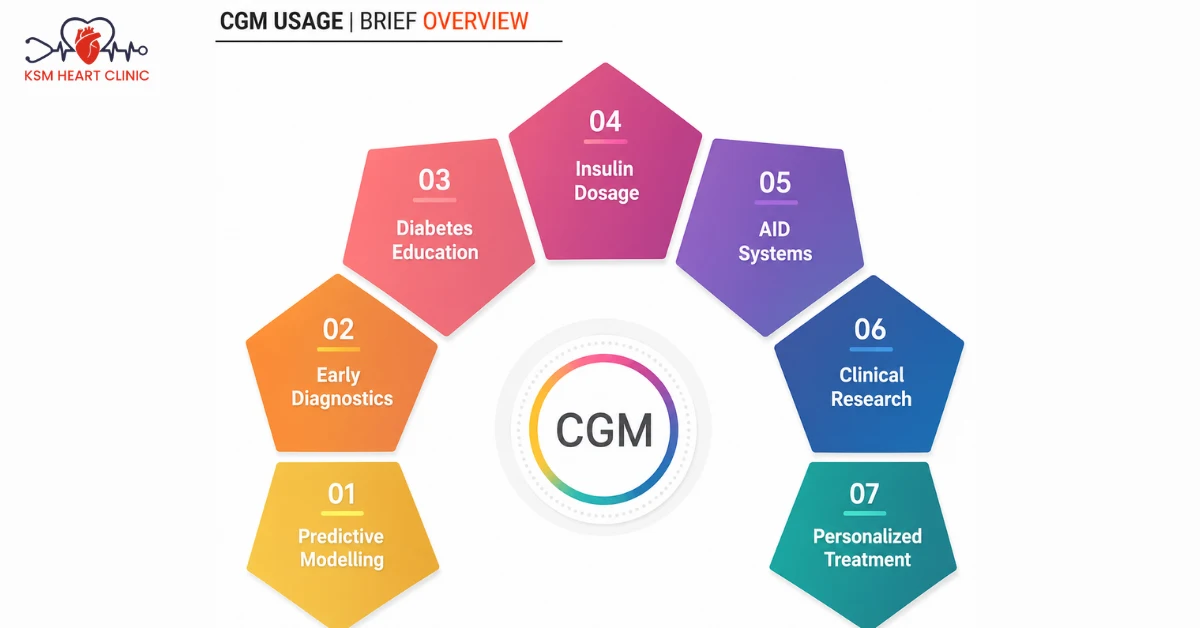
CGM is not just for one type of patient. It is a flexible tool that fits many different situations in diabetes care. Here is a look at who can benefit the most:

  • Type 1 Diabetes: People with Type 1 diabetes have unpredictable blood sugar levels. CGM gives them a safety net by alerting them to dangerous highs and lows before they become an emergency.
  • Type 2 Diabetes on Insulin: If you are managing Type 2 diabetes with insulin injections or an insulin pump, CGM helps fine-tune your doses by showing exactly how your body responds.
  • Gestational Diabetes: Pregnant women with gestational diabetes need tight glucose control. CGM helps them stay within safe ranges without constant manual testing.
  • Frequent Hypoglycaemia: If you experience repeated low blood sugar episodes — especially at night — CGM can alert you before symptoms appear, which can be life-saving.
  • Newly Diagnosed Patients: Starting out with diabetes can feel overwhelming. CGM helps newly diagnosed patients understand how food, activity, and stress each affect their glucose in real time.
  • HbA1c Not Meeting Target: When your three-month average glucose (HbA1c) is not where it should be despite treatment, CGM helps identify the hidden spikes and dips that routine tests miss.

Dr. Karthick Sabapathi assesses each patient individually to decide if CGM is the right step. Not everyone needs it, and a good doctor will be honest about that. But for those who do, a continuous glucose monitoring system in Chennai at the right time can genuinely change how well-controlled their diabetes becomes.

What Are Some Features of Continuous Glucose Monitors?

Modern CGM devices come packed with features that go well beyond just showing a number on a screen. Here is what most quality devices include:

  • Continuous readings every 1–5 minutes: You get a near-constant stream of glucose data, giving you a detailed view of how your levels change throughout the day and overnight.
  • Trend arrows: A simple arrow shows whether your glucose is rising quickly, rising slowly, stable, falling slowly, or falling quickly. This helps you act before a problem gets worse.
  • High and low alerts: You can set personalised thresholds. The device alerts you when your glucose dips too low or climbs too high, giving you time to respond.
  • Smartphone integration: Most CGMs connect to an app on your phone via Bluetooth. You can check your readings at any time without carrying a separate device.
  • Share feature for caregivers: Family members or caregivers can receive your glucose readings on their phones too, which is reassuring — especially for children or elderly patients.
  • Glucose history and graphs: The app stores weeks of glucose data and shows it as clear graphs, helping you and your doctor see patterns over time.
  • Time-in-range reporting: One of the most useful metrics in modern diabetes care. It shows what percentage of the day your glucose stayed within the target range.
  • Water resistance: Most CGM sensors are designed to be worn while bathing, swimming, or exercising, so daily life does not need to change around the device.
  • Extended wear duration: Depending on the device, a single sensor lasts between 7 and 14 days before replacement. Some newer models last even longer.

During a CGMS Test in Chennai with Dr. Karthick Sabapathi, the device used is chosen based on what fits your lifestyle and clinical needs — not a one-size-fits-all approach.

What Are the Benefits of a Continuous Glucose Monitor?

The benefits of using a Continuous Glucose Monitoring System go beyond just convenience. For many patients, it becomes a turning point in how they manage their diabetes.

Better Glucose Control Overall

When you can see your glucose levels in real time, you make better decisions. You know which meals push your sugar up too fast. You know how a walk in the evening helps bring it down. Over time, this leads to a lower HbA1c and fewer complications.

Fewer Episodes of Low Blood Sugar

Hypoglycaemia — when blood sugar drops dangerously low — can cause shaking, confusion, and in serious cases, loss of consciousness. CGM alerts you before this happens, giving you time to eat something and prevent it from getting serious.

Confidence During Exercise

Physical activity affects blood sugar in complex ways. CGM takes the guesswork out of exercise by showing you how your body is responding — before, during, and after a workout.

Discovering Hidden Overnight Patterns

Many people with diabetes have glucose problems at night that they never know about — either going very high after dinner or dropping low in the early hours. A Continuous Glucose Monitoring System captures this data while you sleep, and your doctor can use it to adjust your evening medication or routine accordingly.

Reduced Need for Finger-Prick Testing

While calibration tests may still be needed for some devices, CGM dramatically reduces how often you need to prick your finger. This alone makes daily life more comfortable, especially for people who test six to eight times a day.

Smarter Treatment Decisions for Your Doctor

When Dr. Karthick Sabapathi reviews your CGM report, the data is far richer than anything a standard HbA1c test or logbook can provide. Every meal response, every overnight pattern, every exercise effect — it is all there. This means treatment adjustments are based on real evidence, not estimates.

Real-time blood sugar tracking is not just a feature — it is the difference between reacting to problems and preventing them. With CGM, you are always one step ahead of your glucose levels.

What Are the Drawbacks of CGMs?

Like any medical tool, CGM has some limitations. Understanding these helps you use it wisely and set the right expectations from the start.

  • Sensor inaccuracy in some situations: CGM measures glucose in interstitial fluid, not directly in the blood. This means readings can lag slightly during rapid changes in blood sugar. During fast rises or falls, the number on your device may differ from a finger-prick reading by a small margin.
  • Skin sensitivity or adhesive reactions: Some people develop mild redness or irritation around the sensor site. This is usually minor and manageable with the help of your doctor, but it is worth knowing about before you start.
  • Calibration needs for some devices: Older CGM models require one or two finger-prick tests each day to calibrate the sensor. Newer factory-calibrated models have removed this need, but it depends on the device.
  • Cost consideration: CGM sensors are a recurring expense since they need to be replaced regularly. Dr. Karthick Sabapathi can guide you on which type suits your budget and clinical need.
  • Alert fatigue: If your alerts are not set at the right thresholds, you may receive too many notifications. Proper calibration of alert settings — with your doctor's guidance — solves this easily.
  • Learning curve: CGM generates a lot of data. At first, interpreting trend graphs and percentage time-in-range reports can feel unfamiliar. Most patients get comfortable within a few weeks with the right medical support.

None of these drawbacks make CGM a poor choice. They simply highlight why it is best used with proper medical supervision. As part of a continuous glucose monitoring system in Chennai consultation with Dr. Karthick Sabapathi, you receive guidance on interpreting your data accurately and addressing any device-related concerns.

When Should I Contact My Healthcare Provider?

A CGM is a monitoring device — it helps you stay informed, but it does not replace clinical judgement. There are specific situations where you should reach out to Dr. Karthick Sabapathi promptly, rather than trying to manage on your own.

Important: If your CGM shows a very low reading (typically below 70 mg/dL) that does not respond to treatment after 15 minutes, or a dangerously high reading above 300 mg/dL that does not come down, seek medical attention right away.

Contact Your Provider if You Notice:

  • Repeated low blood sugar alerts at night Nocturnal hypoglycaemia can be serious and often requires a medication or diet change that only your doctor should make.
  • Glucose not coming down after meals If your post-meal glucose consistently stays very high for two hours or more, your treatment plan may need to be reviewed.
  • Large unexplained swings in glucose If your levels are going from very high to very low in a short time without a clear reason, this needs medical evaluation.
  • Sensor site problems Redness, swelling, or persistent pain at the sensor insertion site should be looked at, especially if it does not improve in a day or two.
  • HbA1c not improving despite CGM use If your three-month average is not getting better even though you are using CGM and following your plan, a detailed review of your data with your doctor is the next step.
  • Confusion about your CGM readings If your CGM shows one number and your glucometer shows something very different, check in with your doctor before making any changes to your medication.

The goal of real-time blood sugar tracking is to keep you informed and safe — not to make you anxious. Dr. Karthick Sabapathi and the care team are always available to help you understand what your data means and what, if anything, needs to change.

Conclusion

Blood sugar management has come a long way from simple finger-prick tests twice a day. The Continuous Glucose Monitoring System represents one of the most meaningful advances in diabetes care in recent decades — giving patients and doctors a complete, honest picture of how glucose behaves around the clock.

Whether you are struggling with unpredictable levels, trying to bring your HbA1c down, or simply wanting to understand your body better, a CGMS Test in Chennai at Dr. Karthick Sabapathi's clinic is a practical and worthwhile step. The data it generates does not just sit in an app — it becomes the foundation of a more precise and personalised treatment plan.

Real-time blood sugar tracking means you are no longer waiting for something to go wrong before you act. You see the early signs, you understand the patterns, and together with Dr. Karthick Sabapathi, you make smart, evidence-based decisions about your health.

Frequently Asked Questions

 The cost of a Continuous Glucose Monitor (CGM) in India generally ranges from ₹3,000 to ₹15,000 depending on the brand, sensor type, and monitoring duration. Premium models with mobile app connectivity and longer sensor life may cost more. Some insurance plans and diabetes programs partially cover CGM expenses.

Common signs of high glucose include frequent urination, increased thirst, unexplained fatigue, blurred vision, and slow-healing wounds. Other symptoms may include headaches or unintentional weight loss. Persistent high blood sugar levels can indicate poor glucose control, requiring medical evaluation and lifestyle changes to prevent diabetes-related complications.

 Using a CGM is generally safe, but minor side effects may occur. Risks include skin irritation, redness, or infection at the sensor site. Occasionally, inaccurate readings can happen due to sensor placement issues. Proper hygiene, correct insertion, and regular calibration help reduce these risks and ensure accurate glucose tracking.

Related Blogs

Causes of Heart Disease

Understand causes of heart disease early to prevent risks, causes of heart disease include lifestyle,

Newborn Heart Murmur

Every parent should know about Understanding Newborn Heart Murmur for early detection, better care and

Heart Blockage Treatment

Effective include medications lifestyle changes and Heart Blockage Treatment procedures like angioplasty or bypass improving

Heart Sounds and Atrial Fibrillation

Smarter heart care begins with understanding Heart Sounds and Atrial Fibrillation for early detection and

Symptoms of Heart Attack

Chest pain, fatigue, nausea, and breathlessness are warning signs. Knowing Symptoms of Heart Attack can

Best cardiologist in India

Discover India’s best cardiologists offering advanced heart treatments, expert care, and trusted solutions for all

Exercise for Heart Health

Regular exercise for heart health strengthens your heart, improves recovery after a heart attack, and

Cardiac Resynchronization Therapy

Improves heart efficiency, alleviates heart failure symptoms, and enhances quality of life by synchronizing heartbeats.

Signs of a Healthy Heart

Recognizing a healthy heart involves good stamina, steady heartbeat, normal blood pressure, strong circulation, and

Cause of Heart Attack at Young Age

Early heart attack causes: smoking, poor diet, stress, obesity, diabetes mellitus, hypertension, inactivity, genetics, drugs,

Reason For Heart Blockage

Heart blockage causes include cholesterol buildup, atherosclerosis, smoking, unhealthy diet, obesity, hypertension, diabetes mellitus, stress,

Heart Failure Treatment

Heart failure treatment includes medications, lifestyle changes, and advanced therapies to improve heart function, manage

Best Cardiology Clinic in Adambakkam

Expert heart care, advanced diagnostics, and personalized treatment for long-term cardiovascular health in Adambakkam leading

Best Cardiologist in Chennai

Expert heart care with accurate diagnosis and advanced treatments for comprehensive cardiac management.

Best Interventional Cardiologist in Chennai

Expert interventional cardiology care in Chennai with advanced treatments, experienced specialists, and personalized heart solutions.

Can Obesity Cause Heart Disease

Excess weight can damage arteries, raise blood pressure, and increase the risk of long-term cardiovascular

Best Cardiology Clinic in Chennai 

Expert cardiac care, advanced diagnostics, and preventive heart treatments at the Best Cardiology Clinic in

Living with a Pacemaker

Recovery tips, lifestyle guidance, and expert advice for living with a Pacemake confidently, safely, and

Symptoms of Blocked Arteries in Heart

Know the warning symptoms of blocked heart arteries, from chest discomfort to fatigue, and why

Importance of Healthy Heart​

Discover the importance of a healthy heart, how it supports circulation, organ function, energy levels,

Need Medical Assistance? Book an Appointment Now!

Our experienced anaesthesiologists are here to ensure your safety and comfort