If you have been told you have heart failure, or if you are experiencing symptoms like unusual shortness of breath or swelling in your legs, your mind might be filled with questions and worries. One of the most common fears comes from the name itself. Let’s clear up that misunderstanding right away.
Heart failure does not mean your heart has stopped.
It simply means the heart’s pumping power is weaker than it should be. Think of it like a water pump that isn’t working at full strength. It still works, but the blood moves slower, causing pressure to build up and fluid to collect in places it shouldn’t, like the lungs or legs.
I am Dr. Karthik Sabapathi, an interventional cardiologist based in Chennai. My goal is to help you understand this condition clearly so you can move forward without fear. With the right treatment, expert guidance, and simple lifestyle changes, many people with heart failure can manage their symptoms effectively and enjoy a good quality of life.
Understanding Heart Failure
To manage a condition, you first have to understand it. Let’s break it down into simple terms.
Imagine your heart as a muscular pump. Its job is to collect blood and push it out to every part of your body. In heart failure, the pump doesn’t fail completely; it just doesn’t work as efficiently as it should.
This leads to two main issues:
- The body doesn’t get enough oxygen. Because the pump is weak, the blood moves slower, so your muscles and organs might feel tired.
- Fluid backs up. When the pump can’t keep up, fluid can leak into the tissues, causing swelling.
Heart Failure vs. A Heart Attack
This is a very common point of confusion. A heart attack is an acute emergency. It happens suddenly when a blockage cuts off blood flow to the heart muscle.
Heart failure, on the other hand, is a chronic condition. It develops over time, often because the heart has been weakened by years of high blood pressure, a past heart attack, or other issues.
Types of Heart Failure
The heart has two sides, and each can be affected differently:
- Left-sided heart failure: This is the most common type. When the left side isn’t pumping well, fluid can build up in the lungs. This is why many people feel short of breath.
- Right-sided heart failure: When the right side is affected, fluid often pools in the legs, ankles, feet, or abdomen, causing swelling (edema).
There are also two different ways the heart can weaken: sometimes the squeezing power is reduced (HFrEF), and sometimes the heart muscle becomes stiff and has trouble relaxing to fill with blood (HFpEF). Identifying exactly which type you have is crucial, and that is a key part of the personalized care I provide.
Symptoms: Recognizing the Signs of Heart Failure
The first step toward getting the right care is paying attention to what your body is telling you. Recognizing the early signs of heart failure can make a significant difference in how quickly you get the help you need.
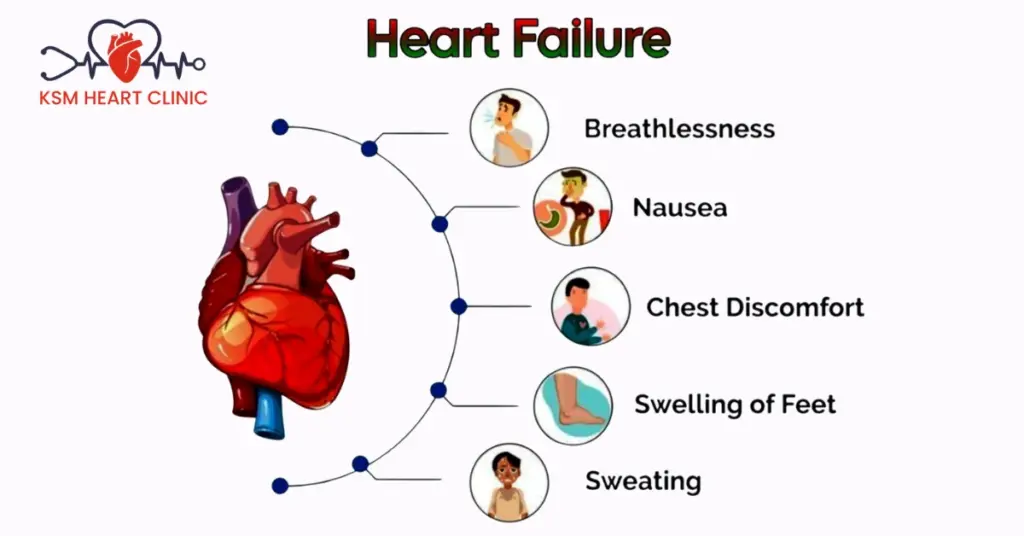
- Shortness of breath (Dyspnea): This is one of the most common signs. You might feel winded after walking up a flight of stairs, or you might find it hard to breathe when you lie flat in bed at night. Understanding shortness of breath causes is vital, and when it’s linked to heart failure, it means fluid is starting to collect in the lungs.
- Swelling (Edema): Look for puffiness in your legs, ankles, feet, or a feeling of tightness in your belly. This is your body holding onto extra fluid because the circulation isn’t moving as fast as it should.
- Fatigue and Weakness: Do you feel constantly tired, even after resting? When your heart isn’t pumping effectively, your muscles and brain aren’t getting the oxygen-rich blood they need to function properly.
- Rapid or Irregular Heartbeat: Your heart is a smart organ. When it realizes it’s not pumping well, it tries to compensate by beating faster to keep up with the body’s demands.
- Persistent Cough or Wheezing: This is often a cough that doesn’t go away. In some cases, it might produce white or pink mucus, which is a sign of fluid in the lungs.
- Rapid Weight Gain: This isn’t about eating too much. If you gain 2-3 kilograms in just a few days, it’s likely your body is holding onto extra fluid.
When to see a doctor: If you experience chest pain, fainting, or severe shortness of breath, seek medical help immediately. For the other symptoms, if they are new or getting worse, it’s time to schedule a consultation. Being proactive is the smartest thing you can do for your health.
Causes and Risk Factors
Heart failure rarely happens in isolation. It is usually the result of other conditions that have put strain on the heart over time.
Common causes include:
- Coronary Artery Disease: This is when the arteries that supply blood to the heart become narrow due to plaque buildup.
- High Blood Pressure: Uncontrolled high blood pressure forces the heart to work much harder than it should. Over years, this extra effort can cause the heart muscle to become stiff or weak.
- Heart Valve Disease: Your heart has valves that open and close to control blood flow. If they are leaky or narrow, the heart has to work overtime to compensate.
- Cardiomyopathy: This refers to damage to the heart muscle itself, which can be caused by infections, alcohol abuse, or genetic factors.
Risk factors you can manage:
- Diabetes and Obesity: These conditions add significant stress to your cardiovascular system.
- Smoking and Alcohol: Smoking damages blood vessels, while excessive alcohol can directly weaken the heart muscle.
Managing these risk factors is a critical part of a holistic care plan. My experience in treating complex cardiac issues helps me guide patients in addressing these root causes alongside the heart failure itself.
Diagnosis: Heart Failure Diagnosis Tests
If you come to see me with symptoms, the process is designed to be calm, thorough, and precise. A consultation is a conversation. We will sit down, discuss your medical history, your family history, and the specific symptoms you’re facing.
To understand exactly what is happening, we rely on specific heart failure diagnosis tests. These tests give us a clear picture of your heart’s structure and function.
- Blood Tests: Simple blood work can reveal markers that show if the heart is under strain (like BNP levels).
- Chest X-ray: This helps us see the size and shape of the heart and check if there is fluid building up in the lungs.
- Electrocardiogram (ECG): This is a quick, painless test that records the heart’s electrical signals to check for rhythm problems or signs of a previous heart attack.
- Echocardiogram (Echo): This is the most important test for heart failure. Think of it as an ultrasound for the heart. It creates a moving picture that allows us to see the heart beating in real-time. It tells us the Ejection Fraction—a key measurement of how well the heart pumps blood with each beat.
- Stress Tests: These help us see how the heart performs under physical activity.
- CT Coronary Angiogram: A non-invasive way to get detailed images of the heart’s arteries to check for blockages.
Treatment Approaches
Once we have a clear diagnosis, we build a plan. Heart failure treatment is not a single pill or surgery; it is a combination of strategies tailored to you.
First, treat the underlying cause. If your heart failure is due to high blood pressure, we will focus on controlling it. If it’s due to a blocked artery or a valve issue, we will address that directly.
Lifestyle Management (Your Role)
This is where you have the power to take control. I advise my patients to embrace these changes as steps toward regaining their health.
- Low-Salt Diet: Salt makes the body hold onto water. Reducing salt helps prevent fluid buildup, which eases the workload on the heart.
- Fluid Management: We may discuss limits on how much you drink to prevent overload.
- Daily Weight Monitoring: This is the best way to track fluid changes. Weigh yourself every morning. If you gain 1-2 kg in a day or two, it’s a sign to call the clinic before you feel worse.
- Safe Exercise: We will guide you on appropriate, moderate exercise to keep your body strong without over-stressing the heart.
Medications (The Tools)
We have excellent medicines that act as tools to take the strain off the heart.
- Diuretics (Water Pills): These help the body get rid of excess fluid, relieving swelling and shortness of breath.
- ACE Inhibitors, ARNIs, and Beta-blockers: These medications help the heart work more efficiently, reduce its workload, and often improve its pumping strength over time.
Advanced Procedures & Interventions
For some patients, managing Heart failure Treatment requires advanced procedures to fix structural problems. With extensive training as an interventional cardiologist, I offer several options:
- Coronary Angiography and Angioplasty (PCI): If blockages are the cause, we use a thin tube to open the artery and place a stent to restore blood flow. I have performed over 1,000 complex PCI procedures.
- Coronary Artery Bypass Graft (CABG) surgery: For patients with multiple or complex blockages, bypass surgery is a highly effective option to reroute blood around the blockages.
- Heart Valve Repair/Replacement: If a leaky or tight valve is causing the strain, we can fix or replace it to restore normal function.
- Devices (ICD, Pacemaker): For some patients, small implantable devices can help regulate the heartbeat and prevent dangerous arrhythmias.
Why Choose Dr. Karthik Sabapathi for Heart Failure Care?
If you are looking for a cardiologist in Chennai , you need someone who combines deep expertise with genuine compassion.
- Expertise: With an MD and DM in Cardiology, I have dedicated my career to understanding the complexities of the heart. My experience in interventional cardiology ensures that if you need a procedure, you are in skilled hands.
- Personalized Care: There is no one-size-fits-all plan for heart failure. I take the time to understand your unique situation, your lifestyle, and your goals to create a treatment plan that fits you.
- Comprehensive Approach: My practice combines the ability to perform advanced interventional procedures with a strong focus on long-term preventive care. We treat the whole person, not just the condition.
- Dedicated Support: Managing heart failure is a journey. I believe in continuous monitoring, clear communication, and compassionate follow-up care. I am here to answer your questions and support you every step of the way.
- Accessibility: I am accessible across multiple reputable hospitals in Chennai and at my own KSM Heart Clinic, making expert care easier to access when you need it.
Taking the Next Step
If you or a loved one are experiencing any of the symptoms mentioned—whether it’s shortness of breath, swelling in the legs, or constant fatigue—please do not wait. Early diagnosis is crucial for the best outcome. You don’t have to navigate this alone.
To book a consultation, you can reach my clinic directly. I practice at the KSM Heart Clinic and other leading locations in Chennai. Our staff is here to help you schedule an appointment at a time that works for you.
Contact KSM Heart Clinic:
Managing heart failure is not just possible; it is an opportunity to take control of your health. With the right expert care and a proactive approach, you can manage your symptoms effectively and get back to enjoying a better, more active quality of life. Let’s take that first step together.
Conclusion
If you take away one thing from this guide, let it be this: heart failure is not a hopeless diagnosis—it is a condition that can be managed. With today’s advanced treatments, clear medical guidance, and your own commitment to small, meaningful lifestyle changes, you can regain control over your health.
Shortness of breath, swelling, and fatigue don’t have to define your days. By understanding your heart, following a personalized plan, and staying connected to expert care, you can reduce symptoms, protect your heart, and get back to doing what you love.
You don’t have to walk this path alone. I am here to listen, guide, and walk beside you every step of the way. Reach out today—let’s build your heart health plan together and move forward with confidence.