A heart attack is a life-threatening medical emergency that requires immediate action. Knowing the correct First Aid for Heart Attack can make the difference between life and death before professional medical help arrives. Prompt First Aid for Heart Attack helps reduce heart muscle damage and increases survival chances. Understanding First aid for heart attack at home is especially important, as most cardiac emergencies occur outside hospitals.
Warning Signs and Symptoms of a Heart Attack
Recognizing early warning signs allows quicker First Aid for Heart Attack. Common symptoms include:
- Severe chest pain or pressure: Often described as tightness, heaviness, or a squeezing sensation in the center of the chest.
- Pain or discomfort spreading beyond the chest: This may radiate to the left or right arm, jaw, neck, shoulders, or back.
- Shortness of breath: Difficulty breathing may occur with or without chest discomfort and can come on suddenly.
- Excessive sweating: Cold sweats or unexplained heavy sweating are common warning signs.
- Nausea or vomiting: Some people experience stomach discomfort, indigestion-like feelings, or vomiting.
- Dizziness or fainting: Lightheadedness, weakness, or sudden loss of balance can signal reduced blood flow to the brain.
Immediate First aid treatment for heart attack should be initiated as soon as these symptoms appear.
First Aid for Heart Attack – Step-by-Step Guide
Providing proper First Aid for Heart Attack can save lives. Follow these steps:
- Call emergency services immediately: Time is critical during a heart attack. Do not wait or attempt to drive long distances without medical guidance.
- Help the person sit or lie down comfortably: Keep them in a relaxed position, preferably sitting upright with support, and encourage them to stay calm.
- Loosen tight clothing: This helps reduce pressure and makes breathing easier.
- Give aspirin if advised: Aspirin is a commonly recommended first aid medicine for heart attack because it helps reduce blood clotting. Only give it if the person is conscious, not allergic, and has been advised by a medical professional.
- Monitor breathing and pulse closely: Watch for changes in consciousness, breathing, or heart rate, and be prepared to act quickly.
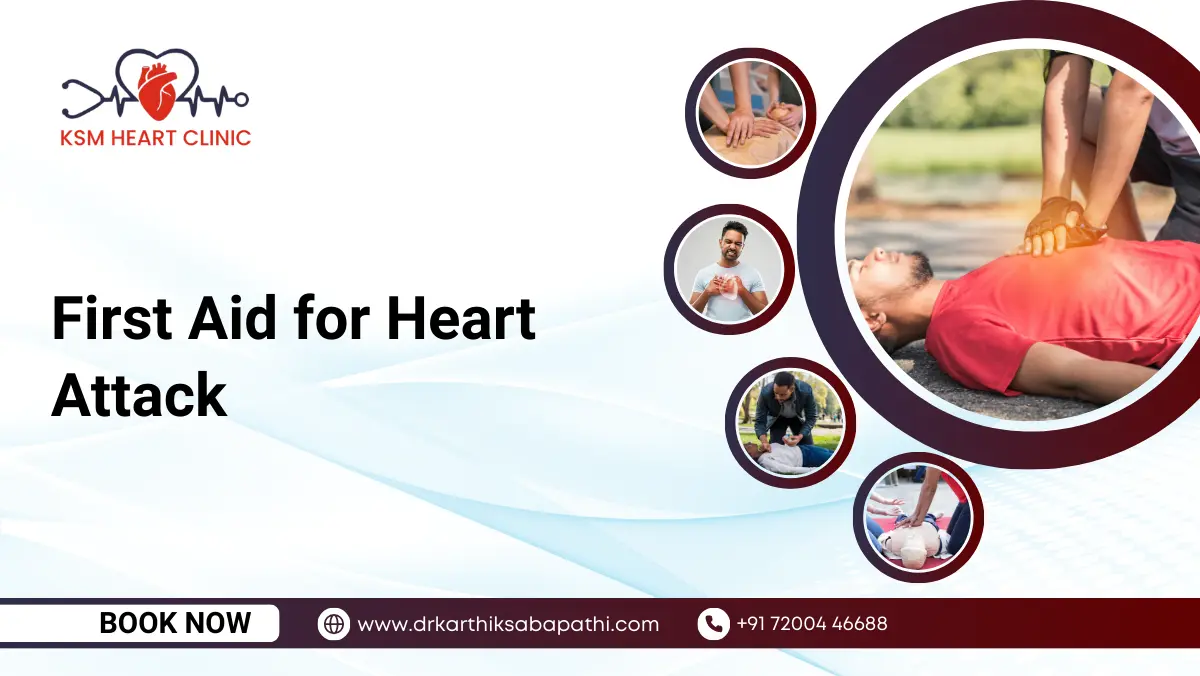
- Perform CPR if the person collapses or stops breathing: Begin CPR immediately and continue until emergency help arrives or the person shows signs of recovery.
These steps form the core of First aid for heart attack at home before reaching a hospital.
How a Heart Clinic Helps During a Cardiac Emergency
A specialized heart clinic plays a crucial role after initial First Aid for Heart Attack. Emergency cardiac care includes:
- Immediate ECG and blood tests
- Emergency angioplasty or thrombolysis
- Continuous cardiac monitoring
- Advanced life-support systems
- Post-attack rehabilitation and care
Early First Aid for Heart Attack combined with expert hospital care significantly improves survival outcomes.
Prevention Tips to Reduce Heart Attack Risk
While First Aid for Heart Attack is critical, prevention is equally important. Reduce your risk by:
- Managing blood pressure, cholesterol, and diabetes
- Eating a heart-healthy diet
- Exercising regularly
- Quitting smoking
- Reducing stress
- Undergoing regular heart check-ups
Awareness of First aid for heart attack at home should always be complemented with preventive cardiac care.
Conclusion
Knowing the correct First Aid for Heart Attack empowers individuals to act confidently during a cardiac emergency. Early First aid treatment for heart attack, combined with rapid medical care, can save lives and reduce complications. Renowned cardiologist Dr. Karthick Sabapathi has made a significant impact in advancing emergency cardiac care, patient education, and heart attack prevention. His commitment to timely intervention, awareness of First Aid for Heart Attack, and advanced heart treatments continues to improve survival rates and long-term heart health for countless patients.