Obesity is more than a cosmetic concern — it is a serious medical condition that affects multiple organs, especially the heart. Many people wonder, can obesity cause heart disease or is it just a risk factor? The truth is that excess body fat directly impacts blood vessels, blood pressure, cholesterol levels, and heart function. Understanding the connection helps in early prevention and timely medical care. This guide explains the science behind the link and what you can do to protect your heart.
Does Obesity Cause Heart Disease?
A common question patients ask is, does obesity cause heart disease or simply increase risk? Medical research confirms that obesity is a major independent risk factor for cardiovascular disease. It not only raises risk but also accelerates underlying damage when other conditions like diabetes are present.
Scientific Explanation
Excess fat tissue alters hormone balance, increases inflammation, and affects how the body processes sugar and cholesterol. These changes damage blood vessels over time.Obesity is closely associated with insulin resistance, increasing the risk of developing Type 2 diabetes. Persistently high blood sugar further injures artery walls and reduces their elasticity. When asking can obesity cause heart disease, the scientific answer is yes — through multiple metabolic and vascular pathways, especially when combined with diabetes.
Risk Statistics
Studies show that individuals with obesity have a significantly higher risk of developing coronary artery disease, heart failure, and stroke. The greater the body mass index (BMI), the higher the cardiovascular risk. This risk becomes even more pronounced in diabetic patients, where elevated glucose levels and abnormal cholesterol together speed up plaque buildup in the arteries.
Long-Term Cardiovascular Impact
Over time, untreated obesity leads to persistent high blood pressure, arterial narrowing, and reduced heart efficiency. In people with diabetes, this long-term strain is amplified because high blood sugar continuously damages blood vessels and heart tissue. This explains why the relationship between obesity, diabetes, and heart disease is not just theoretical but a well-established clinical reality.
How Does Obesity Cause Heart Disease?
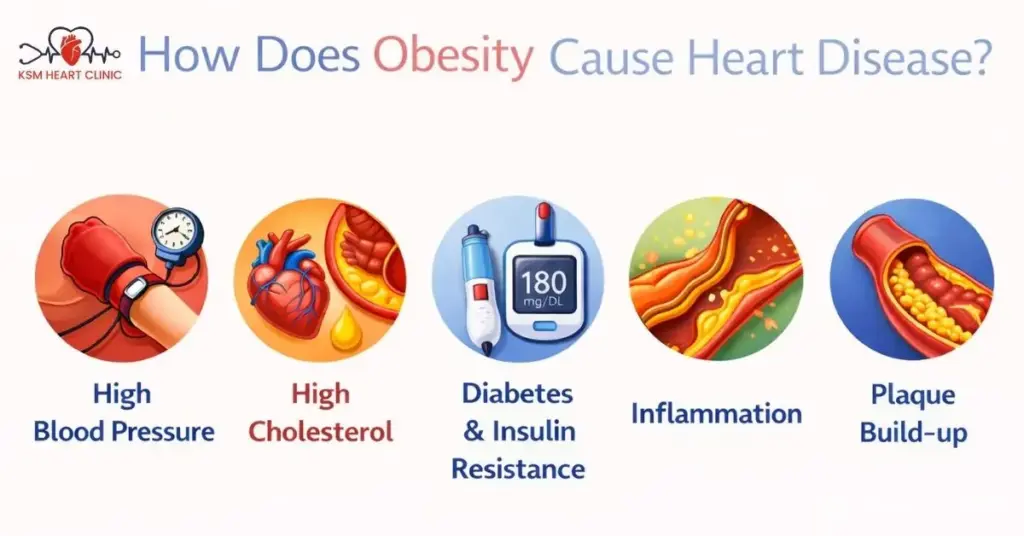
If you’re wondering how does obesity cause heart disease, the answer lies in a series of interconnected changes that affect your entire cardiovascular system. Obesity is not just about excess weight — it creates metabolic, hormonal, and inflammatory shifts that directly strain the heart.
Direct Stress on the Heart Muscle
Having too much body fat can trigger higher levels of inflammation across the body. This chronic inflammation forces the heart to function under continuous stress, gradually weakening the heart muscle and affecting its structure. Over time, this may increase the risk of heart failure and other cardiac complications.
Increased Blood Pressure
When body weight increases, the heart must pump harder to circulate blood efficiently. This added workload raises blood pressure, damages artery walls, and accelerates cardiovascular disease development.
Unhealthy Cholesterol Imbalance
Obesity commonly leads to dyslipidemia — higher LDL (bad cholesterol) and triglycerides, along with lower HDL (good cholesterol). This imbalance promotes plaque build up inside arteries, narrowing blood flow and raising the risk of heart attack and stroke.
Type 2 Diabetes and Vascular Damage
Excess fat contributes to insulin resistance, a key factor in Type 2 diabetes. Persistently high blood sugar damages blood vessels and increases cardiovascular risk significantly.
Sleep Apnea and Oxygen Strain
Obesity increases the risk of obstructive sleep apnea, where breathing repeatedly stops during sleep. These interruptions reduce oxygen supply and place repeated strain on the heart.
So, can obesity cause heart disease? Yes — through inflammation, high blood pressure, cholesterol imbalance, diabetes, and sleep disturbances, obesity creates multiple overlapping risk factors that seriously threaten heart health. Managing weight early can dramatically reduce long-term cardiovascular
Conditions Linked to Obesity
Obesity is a systemic condition that impacts multiple organs and metabolic pathways. It is not just a cosmetic concern but a serious medical issue that raises an important question: can obesity cause heart disease? Clinical evidence strongly supports that it can, along with several other chronic conditions.
Cardiovascular Disease
Obesity raises the likelihood of developing coronary artery disease, heart failure, and stroke. Excess fat raises blood pressure, promotes plaque buildup in arteries, and forces the heart to work
Type 2 Diabetes
One of the key health risks involved is Type 2 diabetes. Obesity leads to insulin resistance, causing high blood sugar levels that damage blood vessels, nerves, kidneys, and significantly increase heart disease risk.
Hypertension (High Blood Pressure)
Increased body weight raises blood pressure because the heart must pump harder to supply blood throughout the body. Chronic hypertension damages arteries and increases the risk of heart attack and stroke.
Dyslipidemia (Abnormal Cholesterol)
Obesity often causes higher LDL (bad cholesterol) and triglycerides and lower HDL (good cholesterol). This imbalance accelerates artery narrowing and increases cardiovascular complications.
Fatty Liver Disease
A buildup of excess fat in the liver may contribute to the development of non-alcoholic fatty liver disease.If untreated, it may progress to liver inflammation, fibrosis, or cirrhosis.
Sleep Apnea
Obesity increases the likelihood of obstructive sleep apnea, where breathing repeatedly stops during sleep. This reduces oxygen levels and places additional strain on the heart, increasing cardiovascular risk.
Warning Signs to Watch
If obesity is present along with the following symptoms, medical evaluation is essential:
- Persistent chest discomfort or pressure
- Shortness of breath during routine activity
- Unexplained fatigue
- Swelling in legs or feet
- Palpitations or irregular heartbeat
Recognizing these signs early can prevent severe complications.
Can Heart Damage Be Reversed?
The good news is that early-stage damage can often be improved. Weight loss, improved diet, regular exercise, and proper medical treatment can reduce blood pressure, improve cholesterol levels, and enhance heart function. However, advanced heart disease may require long-term management. This is why addressing the question can obesity cause heart disease early can significantly change outcomes.
Prevention & Weight Management Strategies
Preventing heart disease starts with controlling weight and managing metabolic health.
- Build your meals around fresh produce, high-fiber grains, quality protein sources, and heart-friendly fats. Choosing natural, minimally processed foods supports weight control and improves overall metabolic health.
- Reduce intake of packaged snacks, refined sugars, and salty foods that strain the heart.Choosing fresh, home-prepared meals helps control blood pressure and cholesterol levels.
- Aim for consistent physical activity such as brisk walking, cycling, or swimming for about 30 minutes most days of the week. Regular movement strengthens the heart and helps maintain a healthy body weight.
- Routine health check-ups help detect silent risk factors early.Tracking these numbers allows timely lifestyle changes or medical intervention..
- If your weight falls in the overweight or obese range, consult a healthcare professional.Early guidance can prevent long-term heart and metabolic complications.
Taking proactive steps reduces the risk of heart complications linked to obesity.
Conclusion
So, can obesity cause heart disease? The evidence clearly says yes. Obesity increases blood pressure, disrupts cholesterol balance, promotes inflammation, and damages blood vessels over time. Understanding how does obesity cause heart disease and recognizing early warning signs can help prevent long-term complications. The good news is that lifestyle changes, weight management, and medical supervision can significantly lower risk. Addressing obesity today is one of the most powerful ways to protect your heart tomorrow.